Knee surgery
The knee is a complex joint exposed to considerable demands in daily life and sports. Its function depends on the precise interaction of bone, cartilage, menisci, ligaments and muscles.
Knee symptoms can have many different causes. Treatment decisions consider symptoms, clinical findings and imaging, as well as individual anatomy and demands in daily life and sports.
Knee osteoarthritis
Knee osteoarthritis is one of the most common causes of knee pain. It affects the joint as a whole and is not simply wear of the articular cartilage. In many patients, only one compartment is affected.
Treatment is guided by the extent and location of osteoarthritis, symptoms and functional limitations, and the patient’s individual circumstances and goals.
Nonsurgical treatment
Symptoms and functional limitations are considered alongside the nature and severity of the changes. Physical therapy, weight reduction, activity modification and analgesic or anti-inflammatory medication can provide relief. Injections or other nonsurgical measures may also be appropriate.
For advanced osteoarthritis with persistent symptoms despite nonsurgical care, surgery may be considered.
Advanced osteoarthritis does not always affect the entire knee. In around half of patients potentially suitable for joint replacement, disease is confined to one compartment. If the other requirements are met, partial knee replacement may be an alternative to total knee replacement.
Only the diseased joint surfaces are replaced. The unaffected compartments, cruciate ligaments and important structures of the natural knee are preserved.
Depending on the compartment involved, a medial, lateral or patellofemoral partial replacement may be considered. This requires careful assessment of disease location and extent, ligament stability and individual anatomy.
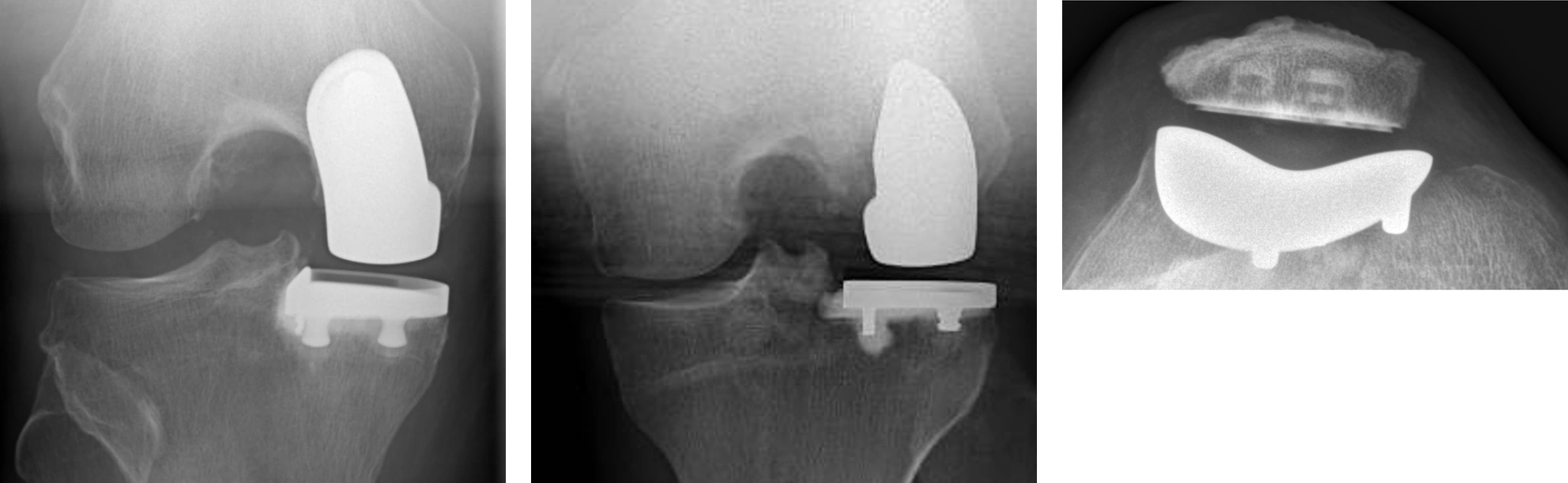
Research indicates advantages in early recovery and a more natural-feeling knee, together with a lower risk of certain serious complications, in appropriately selected patients compared with total knee replacement. Careful selection and precise technique are essential.
When choosing between partial and total replacement, I consider symptoms, examination and imaging, anatomy and ligament stability. When several options are suitable, I discuss their benefits and limitations with each patient and consider their personal needs and expectations.
Technical aspects of surgery
Bone-preserving, stable fixation and precise alignment of the components are particularly important in partial knee replacement.
I assess component position after surgery using standardized radiographs. An additional view with the knee flexed allows alignment to be evaluated in a second joint position.
Medial partial replacement
Lateral partial replacement
Patellofemoral replacement
For isolated osteoarthritis between the kneecap and femur, patellofemoral replacement may be appropriate. Patellofemoral osteoarthritis often involves anatomical abnormalities, particularly dysplasia of the trochlear groove and resulting maltracking of the kneecap.
The aim is not simply to reproduce the pre-existing anatomy. Anatomical factors responsible for dysfunction must be recognized and corrected during surgery.
I typically improve patellar tracking and centering through targeted soft-tissue balancing and component alignment, aiming for balanced function of the entire extensor mechanism.
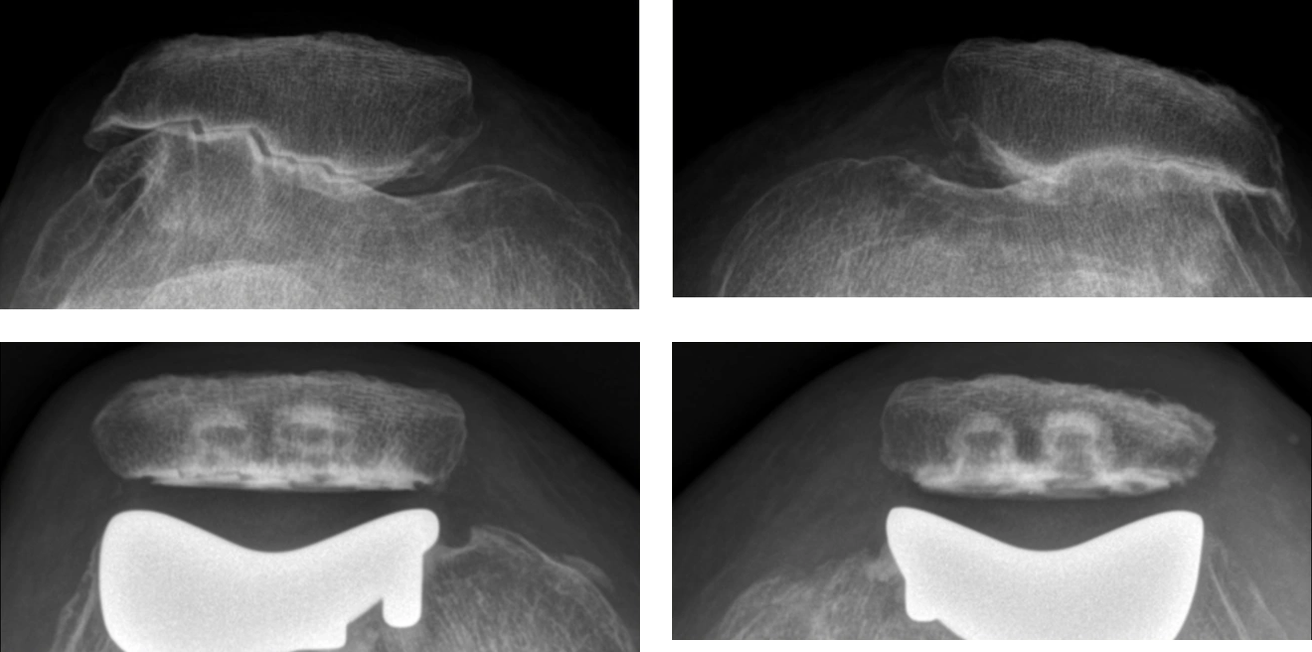
Combined partial knee replacement
If two compartments have advanced osteoarthritis while the remaining compartment and cruciate ligaments are preserved, combining two partial replacements may be considered in selected cases.
Only the diseased compartments are replaced; the healthy compartment and cruciate ligaments remain intact.
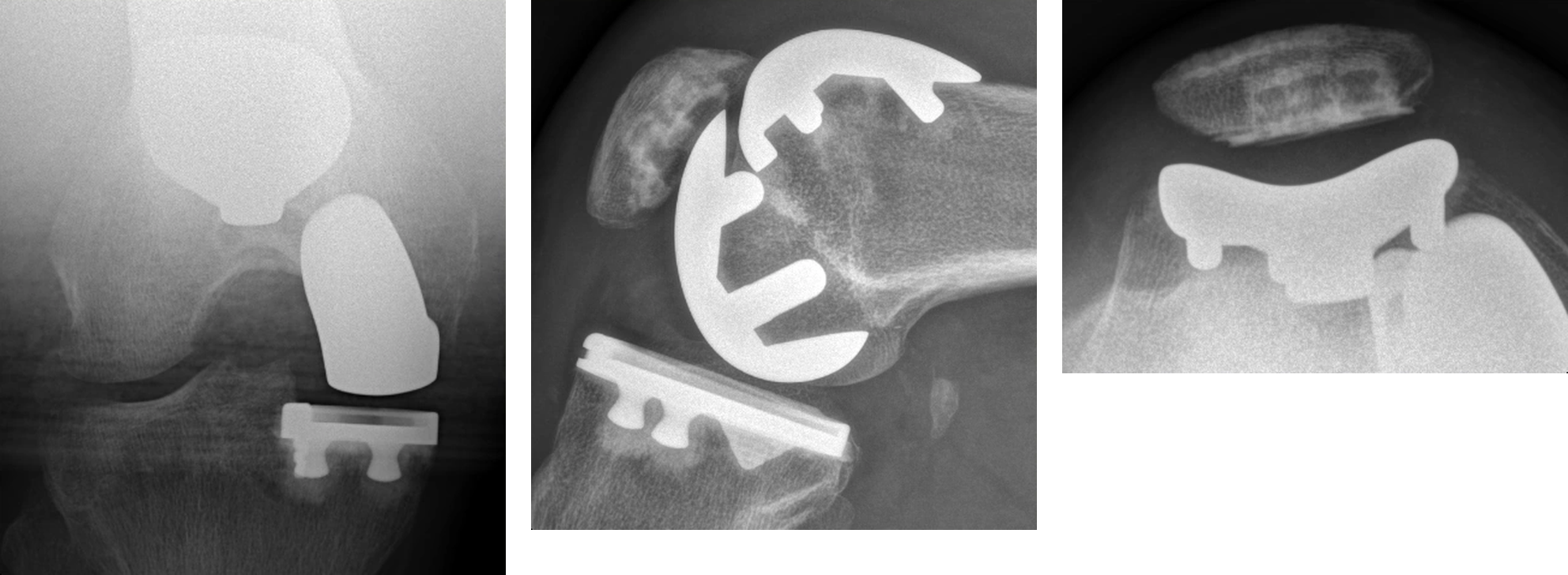
Combined partial replacement is not an established standard treatment for two-compartment osteoarthritis and is reserved for carefully selected patients. Its suitability depends on disease distribution, ligament stability, anatomy and functional requirements.
Further information
The scientific basis, benefits, limitations and current evidence for partial knee replacement are summarized in my review article:
→ Partial knee replacement – Rheuma Schweiz review article (PDF)
ⓘ Focus on the knee – Rheuma Schweiz 2/2026
At the invitation of Editor-in-Chief Professor Beat A. Michel, I developed and coordinated the focus on the knee for issue 2/2026 of Rheuma Schweiz and wrote its introduction.
Contributions by Swiss specialists cover modern imaging, meniscal and patellofemoral disorders, knee replacement and revision surgery.
→ Editorial: Focus on the knee – Rheuma Schweiz 2/2026 (PDF)
If several compartments are affected, or other findings argue against partial replacement, total knee replacement may be the appropriate treatment.
The diseased joint surfaces of the entire knee are replaced.
Function depends on component position and size, balanced ligament tension, stability throughout the range of motion, and the extensor mechanism and patellofemoral joint.
Pre-existing patellofemoral abnormalities, including maltracking associated with dysplasia, are considered during planning and addressed during surgery.
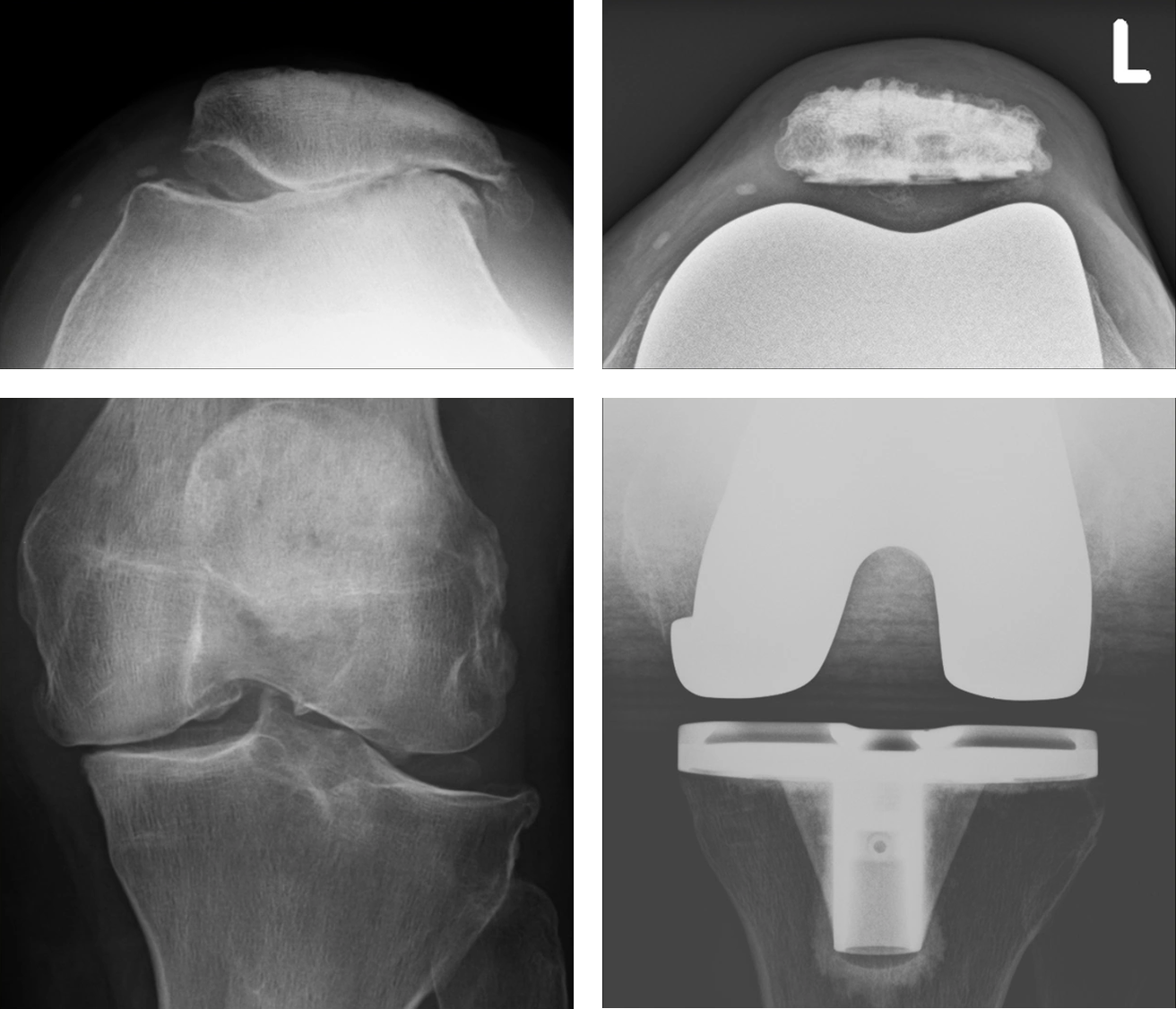
Planning and surgery are tailored to the knee’s individual anatomy and function. Experience from investigating persistent symptoms following knee replacement and from revision surgery informs my approach.
The assessment and treatment of persistent symptoms following knee replacement are an important focus of my clinical work.
Patients expect knee replacement to improve pain and everyday function. Persistent or new symptoms can therefore be distressing, making careful identification of the cause particularly important.
Causes are often multifactorial. Revision is most appropriate when a clearly identifiable problem can be addressed by further surgery.
The first question is whether symptoms arise from the operated knee. Causes outside the knee must also be considered; hip osteoarthritis, for example, may present predominantly as knee pain.
Timing matters. Recovery can continue for many months and sometimes beyond a year. It is important to distinguish expected recovery from a structural or functional problem where waiting would be unhelpful or make later revision more difficult.
Assessment includes clinical examination, careful review of imaging and exclusion of periprosthetic joint infection. Symptom patterns and specific tests often help identify functional problems; pain or a feeling of instability when walking downhill may indicate flexion instability.
Depending on the clinical question, metal artifact reduction MRI or SPECT/CT may supplement standard radiographs. Component position, size and fixation, ligament stability, movement, extensor mechanism and patellofemoral function are assessed.
In my experience, flexion instability – instability when the knee is bent – and patellofemoral problems are among the common causes of persistent symptoms after total knee replacement.
When revision is required, surgery is tailored to the identified problems and may range from correction of individual components to complete revision.
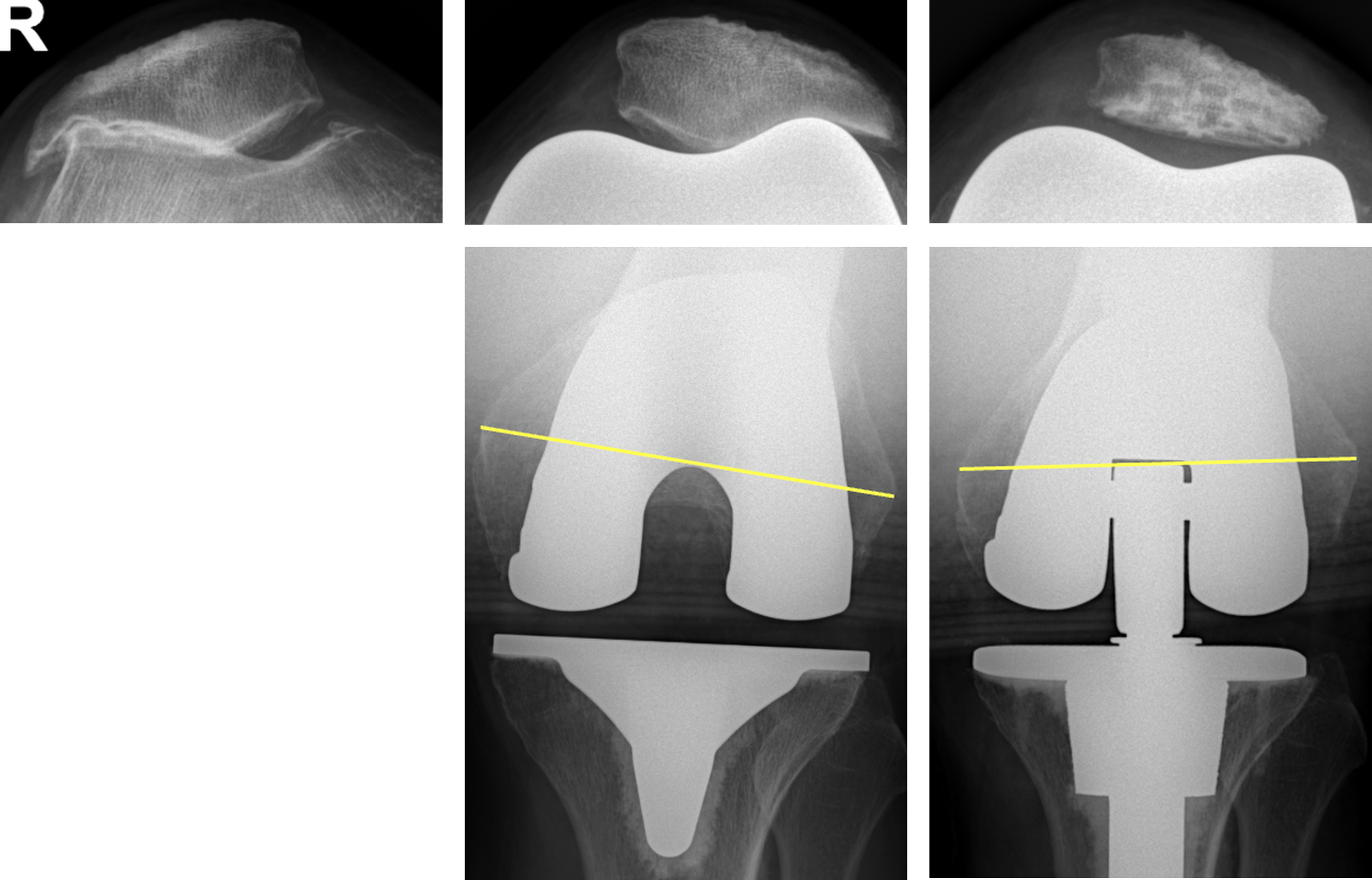
Example: patellofemoral problems after total knee replacement
Pre-existing patellofemoral dysplasia may remain relevant after total knee replacement. Poor tracking or imbalance of the extensor mechanism can contribute to pain and functional limitation.
Assessment of individual patellofemoral anatomy and function therefore forms part of the diagnostic work-up and planning of targeted revision surgery.
Revision following partial knee replacement
If further surgery becomes necessary after partial knee replacement, different treatment options remain available. The cause of the symptoms, the condition of the existing implant, and the anatomical and bony conditions of the knee guide the choice of treatment.
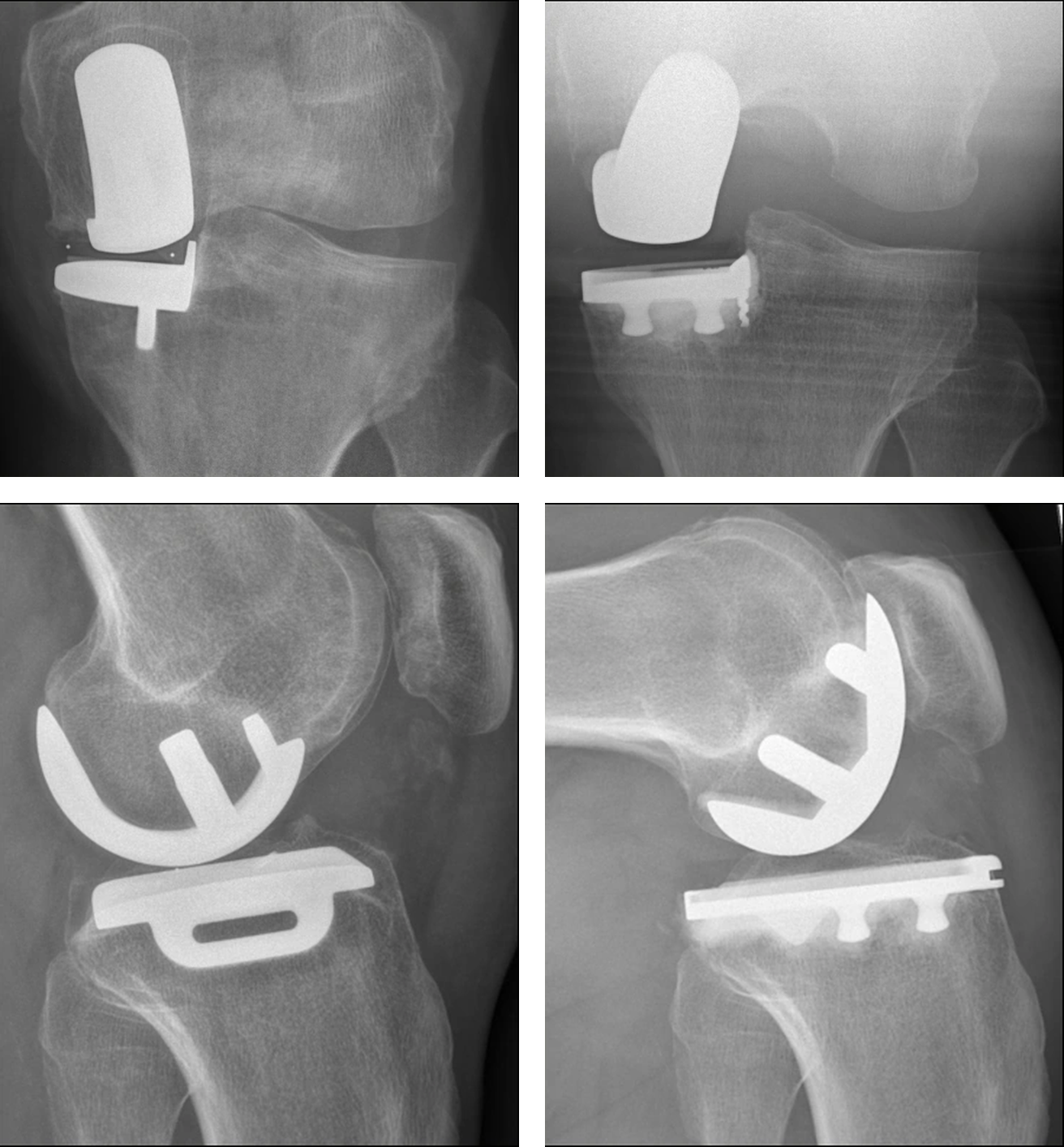
If osteoarthritis develops in another compartment while the existing implant remains satisfactory, a second partial replacement may be added in selected cases. This is staged combined partial knee replacement.
ⓘ Adding to an existing partial replacement
With this approach, the existing, well-functioning partial replacement is retained and the additionally affected compartment is replaced with a second partial implant. The remaining healthy compartment and cruciate ligaments can be preserved.
This staged approach was examined in a systematic review and international Delphi consensus by the European Knee Society (EKS). I am a founding member of the EKS and co-author of the consensus paper.
Jones GG, Campi S, von Knoch F, et al. Indications for the addition of a patellofemoral joint arthroplasty following a previous unicondylar knee arthroplasty – a literature review and Delphi consensus. Archives of Orthopaedic and Trauma Surgery. 2025;145:120.
Staged combined partial knee replacement

If the existing implant itself requires revision, replacement with a new partial implant may be possible when sufficient bone remains for reliable fixation. Otherwise, or if further compartments or functionally important structures are affected, conversion to total knee replacement may be preferable.
ⓘ Revision to a new partial knee replacement
If the remaining compartments and cruciate ligaments are intact, they can also be preserved during revision when the conditions are suitable.
Revision of a partial knee replacement
The aim is to preserve well-functioning components and intact structures of the knee whenever appropriate.
Treatment of meniscal and anterior cruciate ligament injuries depends on the injury, symptoms, functional limitations and athletic or occupational demands. When surgery is required, preserving or restoring natural knee function is the priority.
Meniscal surgery
Meniscal tears differ in cause, location and pattern. Treatment depends on whether symptoms relate to the tear and whether repair is feasible and appropriate.
When surgery is indicated, I aim to preserve as much meniscus as possible. Depending on the tear, repair may be possible; otherwise, only the damaged, mechanically obstructive portion is removed.
Anterior cruciate ligament surgery
An anterior cruciate ligament injury may cause knee instability. The value of reconstruction depends on the degree of instability, athletic and occupational demands, and associated injuries.
Reconstruction is tailored to the individual. Depending on the situation, the quadriceps tendon or hamstring tendons may be used as an autograft.